
What is success - blog 2

The Doctor who is a Healer: Mathew Joseph.
Our vibe attracts our tribe. Or perhaps it is simply destiny — who walks into our life, and at what exact moment.
When I moved to Australia, I did not expect my definition of success to change so completely.
Yet over the past few years, I have met a handful of people who quietly dismantled everything I thought I knew about achievement, ambition, and impact.
Over the next few days, I want to introduce you to four of them.
Let me begin with one.
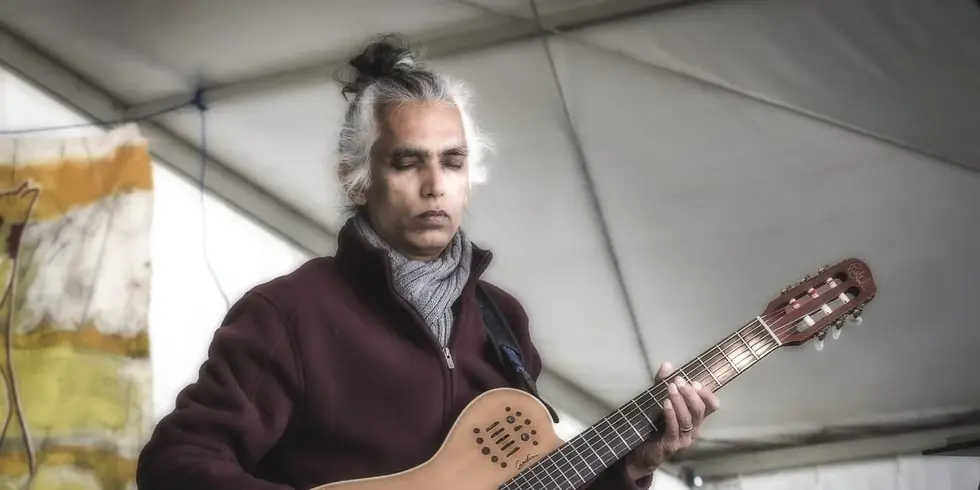
Dr. Mathew Joseph
He received his MBBS and MD from elite institutions in India like CMC Vellore and Kasturba Medical College. Trained also in surgery for trauma and raised by parents who were doctors and surgeons. On paper, the kind of medical trajectory most families would proudly frame and display.
And yet something in him questioned the system.

He began to feel that lifestyle diseases were being managed, not healed. That drugs were sometimes suppressing signals rather than listening to them. He knew that modern medicine was wonderful for trauma-- but not for lifestyle diseases and day to day maladies.
So he stepped away.
He was offered the opportunity to run a community medicine project among the indigenous people (the Palliyars) in the forests of the Palni Hills in Tamil Nadu.
"The idea was to bring western medicine to the tribal villages.
"But I quickly realised they had their own understanding of healing and so I took a back seat and started learning from them."He lived for seven years with tribal communities in Kodaikanal where he learnt ethnobotany (healing with herbs). He spent time with sadhus in the Himalayas. He studied yoga, Thai medical systems, Tibetan medicine, breathwork, and non-duality teachings inspired by sages like Ramana Maharshi. He also studied several hybrid forms such as Thai-Shiatsu, Osteo-Thai and more. He also studied with the blind teacher Ajarn Sinchai Sukparset, a truly great master. he found that he could blend these systems into my Integrative practice in India."
He eventually married an Australian woman he had met in India and moved to a small town in Australia, where he now runs a quiet clinic that focuses on breath, bodywork, and nervou
No aggressive marketing. No social media persona. No branding strategy.
Just presence.
I met him at a time when I was experiencing severe gut issues during a personal life transition. I had seen a GP who immediately prescribed ten tests, including bowel cancer screening.
I was anxious.
When I called Mathew, he listened calmly to my symptoms and then asked me seven words that altered the course of my life:
“Have you heard of the vagus nerve?”
I had not.
We drove three hours to his clinic. It felt less like a clinic and more like a meditation room. A photograph of Ramana Maharshi on the table. A massage table in the centre. Books on non-duality stacked quietly nearby.
For an hour, he guided me through breathwork while performing a Taiwanese abdominal unwinding technique. He gave me a book on non-duality. He told me to practice daily for a week. And he said something extraordinary:
“If the symptoms don’t clear, then get the tests done. No need to come back to me unless you want to.”
Within a week, my symptoms disappeared.
But more importantly, something else began.
I spent the next five years studying holistic health and nervous system science, deeply intrigued by how he had connected gut symptoms to vagal tone so effortlessly.
I once asked him why he taught me the technique instead of asking me to return for multiple sessions. Would that not be more financially rewarding?
He smiled and said, “The origin of the word doctor is docere — to teach. A doctor must teach people to heal, not make them dependent.”
That sentence has stayed with me.
In the traditional sense, Mathew lives simply. A suburban home. A wife. Two children. A small clinic that is barely advertised. Long hours in meditation but most importantly, lots of music on his guitar and through his many monikers on the internet- main artist name, Mathew Joseph, Lektromonk for ambient electric nylon guitar tracks, Nirav Anugraha for Indian devotional music, Matamatix for instrumental guitar covers and Matatronix for cinematic electronica.
With his credentials, he could easily be earning exponentially more in a metropolitan hospital system in India, or with his musical talents, he could be aggressively marketing himself on socials and so on.
And yet, in his presence, there is a kind of peace that no title can confer.
It makes me wonder.
What is success, really?
Is it income and prestige? Or is it alignment and inner quiet?
I recently sat down with him for a two-part interview where he speaks candidly about why he left modern medicine and how he now views healing.
I will share the links soon.
Until then, I would love to hear your thoughts.
If you had the qualifications to “rake it in,” but your soul pulled you elsewhere — what would you choose?
PS- Also do check out Mathews music! I love much of his fingerstyle guitaring!


Comments